
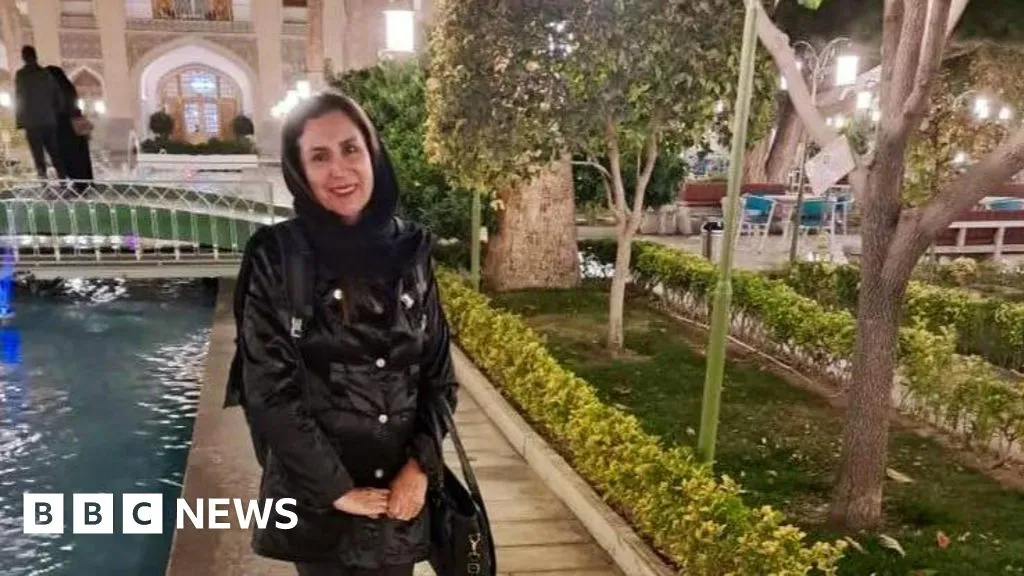
UN experts and over 400 leaders urge Iran to halt the execution of Zahra Tabari, a 67-year-old women’s rights activist, citing legal violations.
Iran, Zahra Tabari, women’s rights, death penalty, UN, human rights, executions, activism
Zahra Tabari: UN Experts and Leaders Urge Iran to Halt Execution of Prominent Women’s Rights Activist
Date: December 2025
International Outcry Over the Imminent Execution of Zahra Tabari
The execution of Zahra Tabari, a 67-year-old electrical engineer and outspoken women’s rights activist in Iran, has sparked urgent global condemnation. UN experts and more than 400 prominent women leaders worldwide have called on Iranian authorities to halt her execution and overturn her death sentence.
Background: Arrest and Unjust Trial
Zahra Tabari was arrested in April on charges of collaborating with the banned People’s Mujahideen Organisation of Iran (PMOI), according to her family. In October, she was convicted of “armed rebellion” by a Revolutionary Court in Rasht via a video link trial that reportedly lasted less than 10 minutes. Her family and legal experts have pointed out that the evidence was highly questionable—a small piece of fabric emblazoned with the words “Woman, Resistance, Freedom,” and an unpublished audio recording.
Iranian authorities have yet to issue any public statements on the case.
Serious Concerns from UN Human Rights Council
The UN Human Rights Council’s special rapporteurs on Iran, violence against women, and arbitrary executions, along with the Working Group on Discrimination against Women and Girls, issued a joint statement warning that Zahra Tabari‘s case exemplifies “a pattern of serious violations of international human rights law.”
- Arrested without a judicial warrant and detained in solitary confinement.
- Denied access to a chosen lawyer and pressured to confess.
- Represented only by a court-appointed lawyer in a rushed, under-10-minute hearing.
- Convicted and sentenced with questionable evidence.
The experts emphasized that “international law restricts the death penalty to the most serious crimes, meaning intentional killing.” They warned that executing Zahra Tabari under such conditions would be an arbitrary execution and highlighted that criminalizing women’s activism constitutes a grave form of gender discrimination.
Global Women Leaders Issue Public Appeal
Over 400 notable women—including Nobel laureates, former presidents, and prime ministers from around the globe—signed a public appeal for Zahra Tabari‘s immediate release. According to the appeal, “Iran is today the world’s number one executioner of women per capita. Zahra’s case lays bare this terror: in Iran, daring to hold a sign declaring women’s resistance to oppression is now punishable by death.”
The appeal was organized by Justice for the Victims of the 1988 Massacre in Iran, a UK-based advocacy group representing families of thousands executed in the late 1980s.
Ongoing Pattern of Executions in Iran
According to the UN, at least 51 other individuals face the death penalty in Iran for national security-related offences such as “armed rebellion,” “enmity against God,” “corruption on Earth,” and espionage.
Notably, another Iranian woman, Kurdish rights activist and social worker Pakhshan Azizi, has received a similar sentence. UN experts clarified that Ms. Azizi’s charges appear to be solely linked to her support for refugees in Iraq and Syria.
Shocking Rise in Executions
Iran Human Rights (IHR), a Norway-based advocacy group, reports that at least 1,426 people—including 41 women—were executed in Iran in the first 11 months of 2025, marking a staggering 70% increase compared to the previous year. Nearly half of the executions were related to drug offences, while 53 individuals were executed for national security charges.
For additional context on the situation of women’s rights in Iran, refer to our comprehensive guide on women’s rights in Iran.
For more information and ongoing updates, visit the authoritative United Nations Human Rights page.
Conclusion
The call from UN experts and a global network of women leaders to halt the execution of Zahra Tabari has increased pressure on Iranian authorities to respect international legal standards. The outcome of this case will likely have significant implications for human rights and the future of women’s activism in Iran.