
Algeria passes law declaring France’s colonisation a crime, demanding apology and reparations, further straining diplomatic ties between the two nations.
Algeria, France, colonialism, reparations, law, apology, history, international relations
Algeria Declares France’s Colonisation a Crime and Demands Apology and Reparations
Algeria’s parliament has unanimously passed a landmark law that officially declares the French colonisation of Algeria as a crime and calls for an official apology and reparations from France. This significant move marks a decisive step in addressing the colonial legacy between the two nations and further strains Algeria-France diplomatic relations.
Details of the New Legislation
The new law, according to state-run TV, not only recognises France’s historical colonisation as a crime, but also criminalises any public glorification of colonialism.
- Parliamentarians unanimously supported the bill, expressing national pride as they wore scarves in the colours of the Algerian flag and chanted “long live Algeria” during the passage.
- The legislation claims France holds “legal responsibility” for “tragedies it caused” and insists “full and fair” compensation is an “inalienable right” of the Algerian state and people.
- It comes amid growing international demands for reparations for both slavery and colonialism, as well as increasing calls for the return of stolen artefacts from Western museums.
Historical Context: France in Algeria
French colonisation of Algeria, which lasted from 1830 to 1962, left a deep scar on the country. The era was characterised by mass killings, large-scale deportations, and ultimately culminated in a bloody war for independence. Algeria estimates that the war claimed 1.5 million Algerian lives, although French historians suggest the death toll was considerably lower.
For more information on the historical context, you may visit Wikipedia’s article on French Algeria.
Current Algeria-France Relations: At a Low Point
Algeria and France now face one of their lowest points in relations since Algerian independence 63 years ago. France’s President Emmanuel Macron has previously acknowledged colonisation as a “crime against humanity,” but an official apology has yet to be offered by the French state.
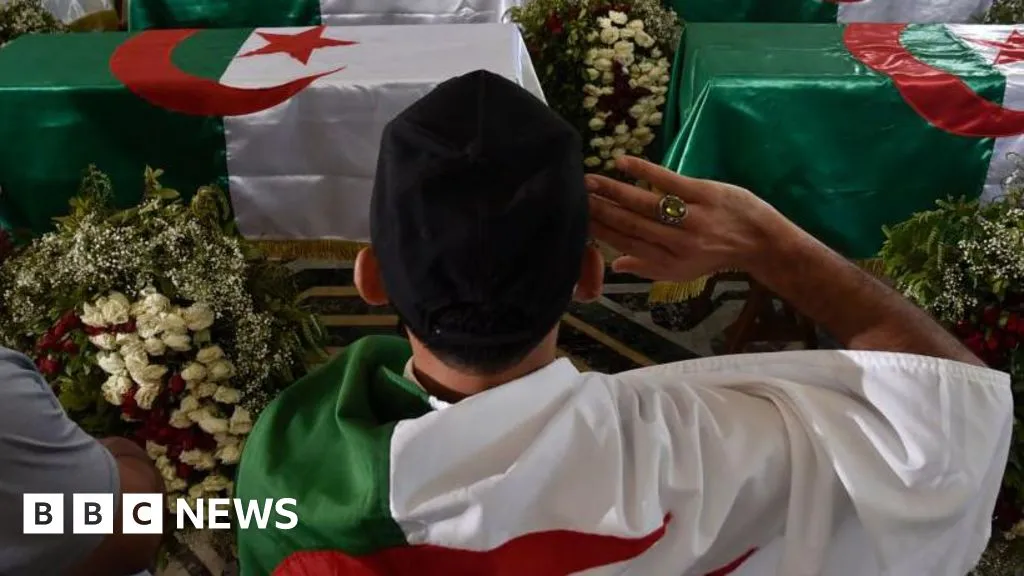
The Algerian government continues to advocate for justice, including the restitution of looted artefacts such as the 16th-century bronze cannon known as Baba Merzoug (“Blessed Father”), currently on display in Brest, France. In 2020, France did return the remains of several Algerian resistance fighters killed in the 19th century, a symbolic but partial gesture toward reconciliation.
Wider Implications: Reparations and Restitution
The passage of this law aligns with increasing global pressure on Western powers to acknowledge their colonial legacies. Many states and activists call for reparations and urge the return of cultural properties to their countries of origin. Last month, Algeria hosted a major African summit focused on legal frameworks to ensure restitution is neither “a gift nor a favour”, according to Foreign Minister Ahmed Attaf.
For an in-depth look at the ongoing debate on global reparations, refer to this analysis from Brookings.
Recent Developments and Diplomatic Tensions
The strained relations were further tested when France recognised Moroccan sovereignty over Western Sahara, backing a plan for limited autonomy—a move strongly opposed by Algeria, which supports the pro-independence Polisario Front.
Additionally, French-Algerian novelist Boualem Sansal was arrested and later pardoned by President Abdelmadjid Tebboune after being accused of undermining national security by questioning Algeria’s borders—a further indication of the sensitivity of national and colonial-related issues.
Learn More about Algerian History
To explore more historical and present-day issues faced by Algeria, see our article on The Lasting Impacts of Algerian Independence.
Source: BBC News