

AI influencers like Gigi are reshaping social media, challenging traditional creators and raising questions about authenticity and the future of online fame.
ai influencers, social media, digital creators, influencer economy, tikTok, artificial intelligence, video content, virtual influencers
The Rise of AI Influencers: How Artificial Intelligence is Disrupting Social Media
By Sakshi Venkatraman, US reporter

Who is Gigi? The Face of Next-Gen Influencers
In many ways, Gigi behaves much like any trending social media influencer: boasting perfect hair and makeup, engaging with her followers, and sharing a variety of clips showing her daily “life”. She even features a cute baby in some of her videos. But beneath her polished facade lies a game-changing difference—Gigi is not real. She’s a meticulously crafted AI influencer, the digital creation of Simone Mckenzie, a 21-year-old University of Illinois student who turned to artificial intelligence to generate income over her summer break.
What may tip off keen viewers are her surreal antics—like eating pizza made of molten lava or using snowflakes as lip gloss. Sometimes, her hands float oddly through objects. These quirks reveal her AI origins, conjured into existence by inputting prompts into advanced chatbots such as Google Veo 3.
The Boom of AI-Driven Content
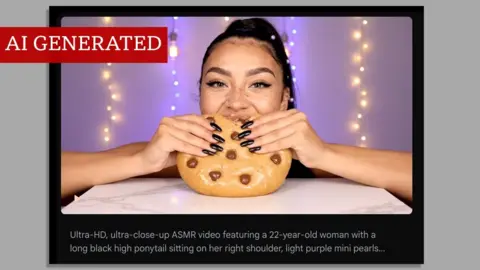
Experts say this genre—sometimes dismissed as “AI slop”—is rapidly taking over social media feeds. And its creators are reaping financial rewards. One of Gigi’s videos earned Mckenzie $1,600 in just four days, and two months later, Gigi had generated millions of views, earning thousands of dollars through TikTok’s creator fund. Jessa Lingel, a digital culture expert at the University of Pennsylvania, believes AI influencers are set to continue growing, transforming the lucrative influencer economy.
While critics claim AI could ruin the authenticity of social media, others see its power to democratize online fame. Those without expensive equipment or glamorous settings can quickly go viral using only their imagination and AI tools.
For more on the evolution of influencers, visit our Influencer Marketing Trends 2024 page.
Traditional Influencers: Facing the AI Challenge

Social media influencing has rapidly become a legitimate multi-billion dollar career path, estimated to be worth over $250 billion by Goldman Sachs. Traditional influencers like Kaaviya Sambasivam, with over 1.3 million followers, pour hours or even days into scripting, shooting, and editing content. By contrast, AI influencers like Gigi can produce viral videos in minutes, with no need for elaborate setups or expensive gear.
“It bears the question: Is this something we can outcompete?” asks Sambasivam. “My output is limited. There are months when I post the bare minimum—I can’t compete with robots.” Sambasivam’s journey included duct-taping her phone to the wall and saving up for better equipment. Meanwhile, Mckenzie built Gigi specifically because she lacked the resources to be a human influencer—but could use AI to create any backdrop or persona desired.
Blurring Reality: Are AI Videos Too Real?
When Simone Mckenzie began, she used Google Veo 3 to generate her digital alter ego — Gigi, a 21-year-old with tanned skin, green eyes, freckles, and long black hair. The AI model can talk and interact, sometimes engaging directly with audience doubts about her authenticity, and often performing surreal or outlandishly humorous stunts — like eating slime cookies or jewel-studded avocados.
These digital fabrications push the boundaries of realism and fiction. “This is a form of meme culture,” remarks Cornell University’s Brooke Duffy. Advanced AI programs now produce hyper-realistic videos faster and more convincingly than ever, building on previous trends like FaceTune and celebrity deepfakes. From cartoon cats working in fast food to ultra-realistic fake doorbell footage, AI influencers occupy every genre imaginable.
Global creators are cashing in. In South Korea, an American TikTok user runs a channel starring “Gamja,” an AI puppy who cooks and styles his hair, attracting partnerships from brands keen to leverage viral AI appeal. Another top AI influencer is Daniel Riley, whose historical “you wake up as…” vignettes on TikTok have tens of millions of views.
Monetizing the AI Boom
Some creators, like Riley, sell bootcamps to teach others how to create viral AI content, opening new revenue streams beyond social media monetization. This speaks to the fast-evolving landscape of the AI influencer economy.
Can Audiences Tell the Difference?
AI influencers like Gigi often address skepticism directly: “Stop calling me AI,” she insists in videos. But many audience members can’t distinguish between digital avatars and real people, raising concerns about misinformation, especially among children.
Experts warn that the increasingly lifelike nature of AI-generated videos could make it “almost impossible for an ordinary human to tell the difference soon,” according to Jessa Lingel. This raises red flags about scams and digital misinformation, yet also highlights how compelling—and shareable—boundary-pushing AI content can be.
A recent Harvard University study found that a growing number of teenagers use AI to generate art, music, and videos, showing how embedded this technology is becoming in youth culture.
Between Fascination and Misinformation
Not every viewer realizes what they see is artificial. The creator of Gamja the AI puppy regularly hears from viewers worried about his health—mistaking digital antics for actual ones. The question remains whether public media literacy can keep pace with technological advances.
For additional credible resources on AI-generated media risks, review the FTC Guidance on AI-Generated Content.
Conclusion: The Future of AI Influencers
The meteoric rise of AI influencers is transforming the digital economy, blurring the lines between reality and simulation. For audiences and influencers alike, the challenge will be navigating a world where anyone—or anything—can capture the world’s attention.
Read the original report on BBC News