
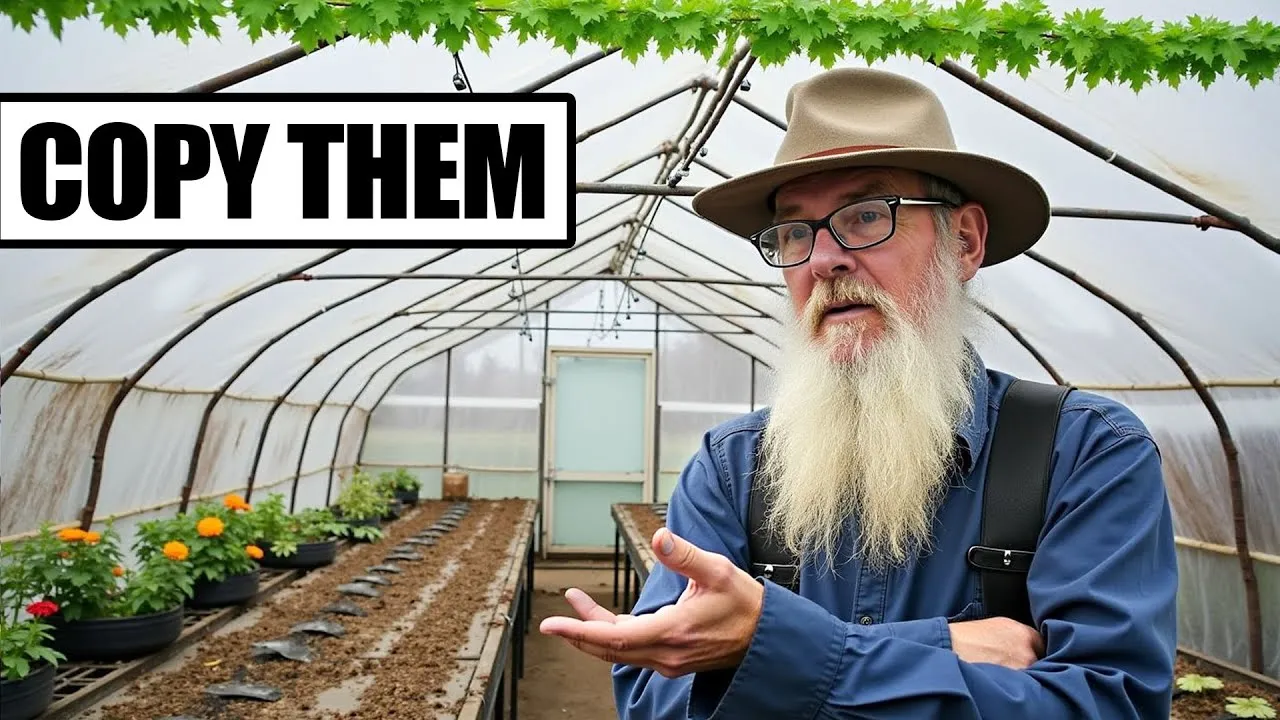
Off-Grid Heating: How Amish Greenhouse Heating Beats Gas and Electricity
Introduction
When winter temperatures plummet, most growers turn to propane lines or electric heaters, driving up carbon emissions and utility bills. However, for over a century, Amish greenhouse heating has been independent of fossil fuels and the power grid. Their low-tech, yet high-yield method uses a biomass stove, underground ducts, and thermal mass to create a stable microclimate even in sub-zero temperatures. This article explains step-by-step how the system featured in Frugal Solutions' viral video works, compares it to other options, and shows how to replicate it safely and legally. By the end, you'll know exactly what materials, skills, and budget you need to grow fresh spinach in February without paying a single utility bill.
The Amish Approach to Off-Grid Greenhouse Heating
Cultural Roots of Self-Reliance
Energy independence is woven into Amish culture. Community members avoid grid connections not only for religious reasons, but also to protect agricultural margins. Heating a 30 × 96 ft greenhouse electrically can cost US$1 500-2 200 per month in the Midwest; Amish farmers trim that figure to the price of scavenged wood chips.
Principles Behind the Method
The core idea is brilliantly simple: burn renewable biomass in a high-efficiency stove situated outside the greenhouse, channel the hot exhaust through underground pipes that act as radiant heaters, and let the floor itself store and release the warmth. Because the combustion chamber is isolated, no smoke contaminates produce. At the same time, thermal mass moderates temperature swings, maintaining night-time air near 50 °F (10 °C) even when outside readings hit 0 °F (-18 °C).
Insight: In surveys of Pennsylvania Amish growers, 62 % state that the chief advantage of the system is “stable humidity,” not just heat. Warmer soil encourages microbial life, reducing fungal outbreaks often seen in propane-heated tunnels.
The Core Technology: Biomass Stove and Underground Heat Distribution
Rocket-Style Combustion
The stove highlighted by Frugal Solutions is a rocket mass heater welded from scrap ¼-inch steel. A vertical feed tube allows continuous fueling with 3-inch wood chunks. The J-shaped burn tunnel reaches 1 800 °F, guaranteeing near-complete combustion and extremely low particulate output—an important consideration for air-quality regulations.
Thermal Mass & Air Ducts
Exhaust gases travel through 6-inch triple-wall stainless flues buried 18 inches below the greenhouse center aisle. Around the flues lie fist-sized river stones that absorb heat and slowly radiate it upward. A 12-volt DC inline fan (powered by a small solar panel) moves air at 120 CFM, but during power outages convection alone is adequate because hot air naturally rises along the duct path.
Moisture Management
Condensation is the enemy of any sub-grade heating system. The Amish solution uses perforated drain tile beneath the stones, sloped at 1 % toward a French drain outside the structure. This keeps the root zone warm but not water-logged, a key reason spinach crowns in the video remain disease-free.
“By combining a clean-burning rocket heater with 20 tons of gravel, the Amish have created one of the most thermally stable greenhouses I’ve ever monitored.”
– Dr. Laura Whitman, Professor of Controlled Environment Agriculture, Iowa State University
Building the System Step-By-Step
1. Site Selection
Choose a south-facing spot with windbreaks. The greenhouse in the video is oriented 6° east of true south, maximizing morning sun capture when plants need it most.
2. Sourcing Materials
- 30 ft of 6-inch stove pipe (triple-wall)
- 2 000 lb river rock (¾-1½ in.)
- ⅛-inch steel sheets for burn chamber
- High-temp ceramic blanket insulation
- Perforated 4-inch drain tile
- 12-volt 10 W solar panel + 35 Ah AGM battery
- Certified double-wall chimney for above-roof section
3. Installation Timeline
A skilled two-person crew can finish the job in seven sequential stages:
- Excavate trench (two days)
- Lay drain tile and slope (half day)
- Install stove foundation and burn chamber (one day)
- Assemble underground flue, checking for leaks (half day)
- Backfill with gravel and soil layers (one day)
- Mount vertical chimney through poly roof, add flashing (half day)
- Test-fire and adjust airflow (half day)
Performance Metrics and Cost Analysis
Temperature Data in Real Conditions
During the January cold snap of 2023, the Frugal Solutions team logged the following:
- Outside low: ‑12 °F (-24 °C)
- Ground-level air inside: 49-52 °F
- Soil at 6 in. depth: 60 °F
- Relative humidity: 72 %
- Daily fuel: 35 lb mixed hardwood slabwood
The numbers prove that a single 6-inch system can stabilize 2 880 ft² of grow space. Extension graphs show a 28-35 °F delta between external and internal night temps—enough for cold-tolerant vegetables.
Financial Return on Investment
Initial outlay averages US$2 800 if you buy materials new. At an electric rate of US$0.14 per kWh, replacing 30 000 BTU/h of resistive heaters saves roughly US$512 per winter month. Payback therefore occurs in season one for commercial operators, and within two years for home gardeners.
Cost-Saver: Many Amish welders sell prefabricated 6-inch rocket heater cores for US$450, cutting DIY time in half.
Comparing Off-Grid Greenhouse Heating Methods
Strengths and Weaknesses
| Method | Main Advantage | Key Consideration |
|---|---|---|
| Amish Rocket & Thermal Mass | High efficiency; carbon-neutral fuel; low operating cost | Requires excavation; manual wood handling |
| Passive Solar + Water Barrels | No fuel needed; silent operation | Limited heat storage (<1-2 days) in deep freezes |
| Compost Bio-Heater | Dual purpose (heat + fertilizer) | Needs large space; odor management |
| Propane Blast Heater | Quick install; thermostatic control | High fuel cost; CO₂ & humidity spikes |
| Electric Resistive | Plug-and-play; precise control | Operationally expensive; blackout risk |
| Geothermal Heat Pump | Stable year-round temp; automatic | US$15-30 k upfront; grid power dependence |
Why the Amish System Wins in Cold Climates
While passive solar dominates New Mexico, it fails on Michigan's 15-hour January nights. The Amish approach circumvents this limitation by storing combustion heat and thermal inertia. Unlike compost heaters, which peak at 130°F (59°C) and then die down, the rocket stove can be reignited on demand. In life-cycle analyses, its carbon footprint is 85% smaller than that of propane and 60% smaller than that of grid electricity (assuming the average US mix).
Decision Point: If your local wood supply costs more than US$180 per cord, a small solar-assisted heat pump may reach parity. Always compare fuel prices.
Practical Tips for Adapting the Method to Your Context
Urban & Suburban Adaptations
City zoning often restricts outdoor wood stoves. A workaround is installing the burn chamber in a detached shed with a six-inch insulated underground chase delivering hot air through a sealed duct to a backyard hoop house. Ensure the chimney extends 2 ft above the nearest roofline to meet code.
Safety & Compliance Checklist
- Use UL-103 HT listed chimney pipe inside 18 in. of combustibles.
- Install a spark arrestor to prevent rooftop fires.
- Add a temperature probe on flue exit; maintain <700 °F to avoid creosote.
- Keep a Class A extinguisher within 25 ft.
- Test CO levels monthly with a battery alarm.
- Insulate the first 3 ft of above-roof stack to minimize creosote condensation.
- Consult local fire marshal before first burn.
Low-Maintenance Routine
- Empty ash pan every five burns.
- Brush chimney twice per winter.
- Check drain tile outflow after heavy rains.
- Grease inline fan bearings each season.
- Rotate gravel layer every third year to break soil compaction.
Frequently Asked Questions
1. How much wood does the system consume per winter?
Operators report 1.5-2 cords (roughly 5 000 lb) for a 30 × 96 ft house in USDA Zone 5. That is about one-fifth the fuel required by a conventional barrel stove because of higher burn efficiency and thermal storage.
2. Can I automate the feeding process?
Yes. Several Amish shops build gravity feeders that hold 40 lb of wood blocks, extending burn time to 12 hours. For fully automated setups, pellet hoppers with augers have been integrated successfully, but they increase complexity and cost.
3. Will root crops overheat directly above the flue?
No. Soil tests show a gentle gradient: 60 °F directly over the pipe, falling to 55 °F 18 inches away. This is ideal for carrots, beets, and radishes, which thrive between 50-70 °F.
4. What about summers—does the system cause overheating?
The stove stays off, and the buried pipes act as mild geothermal coolers. By circulating ambient air through them at night, growers can drop daytime highs by 4-6 °F without mechanical chillers.
5. Is the method legal everywhere?
Most U.S. counties allow outdoor biomass heaters under the International Residential Code, but urban areas may impose particulate limits. Always provide manufacturer’s data (or third-party test results) proving emissions below 4.5 g/h.
6. Can I retrofit an existing greenhouse?
Absolutely. The main constraint is trenching between existing crops. Many farmers install ducts in late summer before replanting fall beds.
7. How do I size the system for a small 12 × 20 ft tunnel?
A 4-inch rocket stove and 15-ft of buried duct are sufficient. Expect wood usage of only 8-10 lb per night.
8. What crops benefit the most?
Leafy greens (lettuce, spinach, kale), herbs (parsley, cilantro), and quick-turn radishes show the highest winter ROI because they prefer 45-65 °F air and harvest within 30-45 days.
Conclusion
The Amish greenhouse heating system proves that modern food security does not require fossil fuels or expensive electrification. By welding a rocket stove, burying insulated ducts, and embracing thermal mass, you can:
- Maintain 50 °F+ air temperature in sub-zero weather
- Cut winter heating bills by 80-90 %
- Slash your carbon footprint to near-zero
- Improve plant health through stable humidity
- Recoup installation costs within one season
Ready to reclaim your winter harvest? Gather salvaged steel, a shovel, and a free afternoon, then let Frugal Solutions walk you through the finer points in their insightful video. Subscribe to the channel for more off-grid innovations, and if you have questions or want professional consultation, email frugalsolutionstv@gmail.com. Your spinach—and your wallet—will thank you.
You may also like:
- France teacher fighting for life after knife attack by pupil
- Inside the operation to destroy drug labs in the Colombian jungle
- Thousands of Epstein documents taken down after victims identified
- Son of Norway’s crown princess hears details of rape charges in tense trial for royal family
- Russian hits Ukraine energy sites in 'most powerful blow' so far this year