
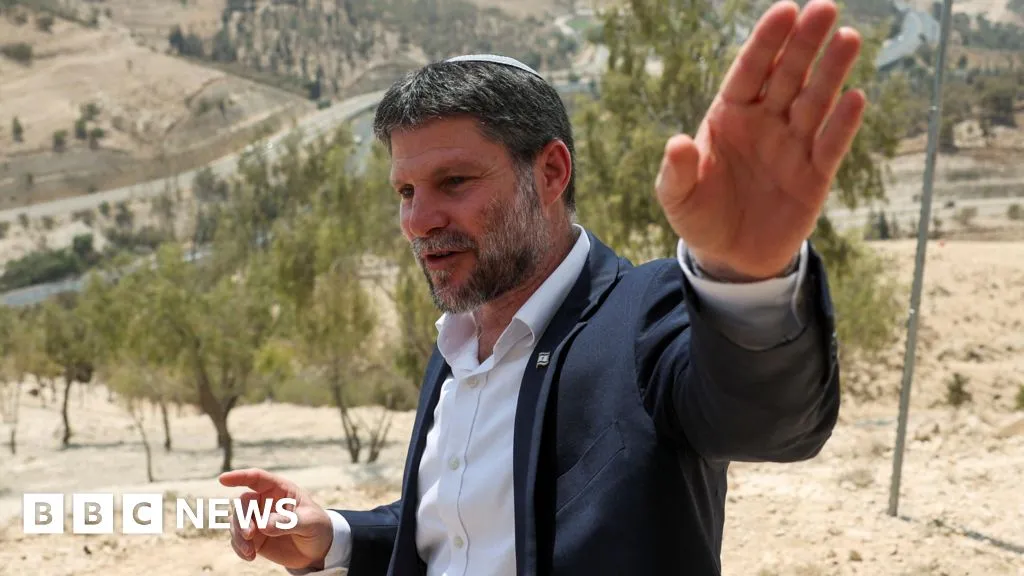
Israel approves 19 new settlements in the occupied West Bank, escalating settlement expansion and raising tensions over the two-state solution.
settlement expansion, Israel West Bank, two-state solution, Israeli settlements, Palestinian state, Middle East conflict, Smotrich, occupation
Settlement Expansion in the Occupied West Bank: Israel Approves 19 New Settlements
Israel’s security cabinet has approved the recognition of 19 new settlements in the occupied West Bank, further escalating its settlement expansion initiative. This latest move has drawn sharp international criticism and raised renewed concerns about the viability of an independent Palestinian state.
Government Push for More Settlements
Far-right Finance Minister Bezalel Smotrich — a key settler and proponent of increased settlements — tabled the proposal along with Defence Minister Israel Katz. According to Smotrich, the decision aims to block any possibility of establishing a Palestinian state.
International Response
Israeli settlements in the occupied West Bank are considered illegal under international law (see: UN analysis of settlements). The move has drawn condemnation from Saudi Arabia and strong criticism from United Nations Secretary-General António Guterres, who stated that Israel’s “relentless” settlement expansion only serves to heighten tensions, restrict Palestinian access to their land, and threaten the future of a sovereign Palestinian state.
West Bank Violence and the Two-State Solution
Since the outbreak of war in Gaza in October 2023, violence in the occupied West Bank has surged. Many fear that continued settlement expansion will only further entrench the Israeli occupation and make a two-state solution increasingly unattainable.
The two-state solution envisions an independent Palestinian state in the West Bank and Gaza Strip — with East Jerusalem as its capital — along borders roughly based on those that existed prior to the 1967 Arab-Israeli war. To learn more about the historical context, read our article on the History of the Arab-Israeli Conflict.
Recent Approvals and Policy Changes
Since taking office in 2022, the current Israeli government has significantly ramped up the approval of new settlements and started legalizing previously unauthorized outposts as “neighbourhoods” of existing settlements. This has led to the approval of 69 settlements over the last three years, according to Smotrich.
Key Approvals
- In May, Israel approved 22 new settlements — the largest settlement expansion in decades. (BBC report)
- The latest approvals include the re-establishment of two previously dismantled settlements: Ganim and Kadim.
- Plans to build 3,000 homes in the E1 corridor between Jerusalem and Maale Adumim — a project long frozen amid international opposition — were also greenlit.
Smotrich claims these measures will “bury the idea of a Palestinian state”.
Global and Regional Implications
Currently, about 700,000 Israeli settlers live in around 160 settlements in the West Bank and East Jerusalem, according to the Israeli anti-settlement group Peace Now. This land is the intended site for any future independent Palestinian state.
Settlement expansion has not only incensed Arab nations, who claim it undermines the two-state solution, but also raised concerns about a potential annexation of the occupied West Bank. Despite US President Donald Trump previously warning Israel against such moves, the current trajectory continues to challenge established international norms and diplomatic agreements.
As of September, several nations, including the UK, Australia, and Canada, have recognized a Palestinian state — a symbolic, yet significant diplomatic move. Israel, however, remains opposed, with Prime Minister Benjamin Netanyahu stating that a Palestinian state “will not happen”.