
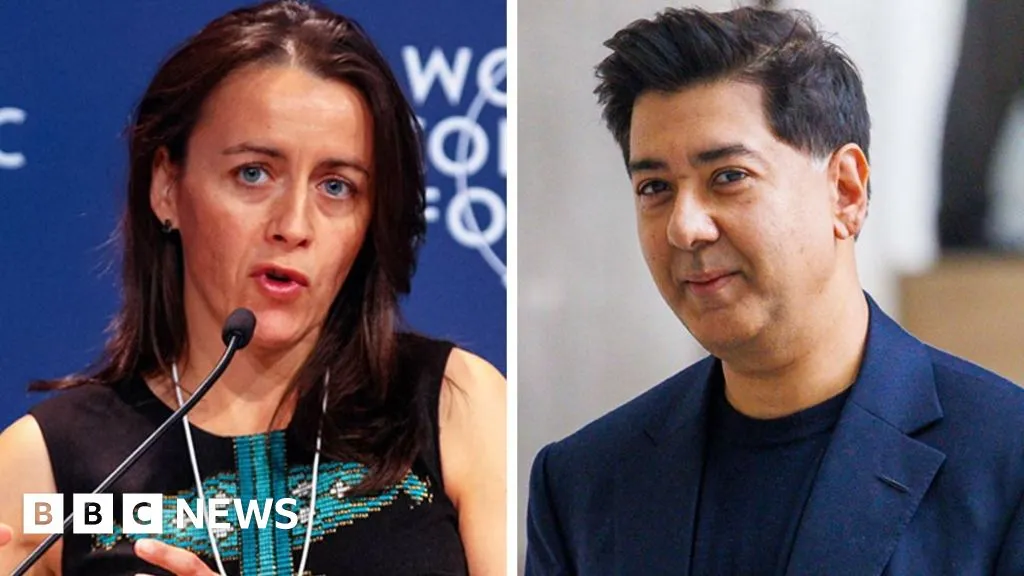
US bans five activists, including two Britons, over alleged attempts to influence American tech platforms and free speech, sparking international outcry.
news, US visa ban, free speech, digital platforms, censorship, Centre for Countering Digital Hate, Global Disinformation Index, Digital Services Act
US Denies Visas to European Activists Over Free Speech Concerns
The United States has denied visas to five European social media campaigners, two of whom are British, prompting an international debate on free speech and digital regulation.
Who Are the Banned Activists?
- Imran Ahmed – Former Labour adviser, now CEO of the Centre for Countering Digital Hate (CCDH).
- Clare Melford – CEO of Global Disinformation Index (GDI) and founder of the non-profit in 2018.
- Thierry Breton – French ex-EU commissioner and architect of the EU’s Digital Services Act (DSA).
- Anna-Lena von Hodenberg and Josephine Ballon – Senior figures from German anti-online hate group HateAid.
US Government’s Rationale for Visa Denial
The US State Department accused the individuals of seeking to “coerce” American tech platforms into suppressing free speech. Secretary of State Marco Rubio described them as belonging to a
“global censorship-industrial complex,” ensuring that “extraterritorial overreach by foreign censors targeting American speech” would not be tolerated.
According to the US, the measures were a response to campaigns for restrictions on tech companies, and the administration emphasized its America First approach to foreign policy.
International Reactions and Condemnations
European Leaders Respond
French President Emmanuel Macron labelled the move “intimidation” and pointed to an attempt to undermine European digital sovereignty. The European Commission stated it had “requested clarifications” from the US and pledged to respond to defend its regulatory autonomy.
Thierry Breton responded by referencing censorship concerns, posting on X: “To our American friends: Censorship isn’t where you think it is.” The clash reflects rising transatlantic tensions over approaches to digital platform regulation.
UK Government Stands By Activists
A UK government spokesperson addressed the incident, stating, “While every country has the right to set its own visa rules, we support the laws and institutions which are working to keep the internet free from the most harmful content.”
The Centre for Countering Digital Hate and Global Disinformation Index
Imran Ahmed has been a significant actor in UK politics and countering online hate. He previously worked as an aide to former Labour minister Hilary Benn, and his initiatives have reportedly collaborated with senior Labour Party figures and the Biden administration.
Clare Melford founded the Global Disinformation Index (GDI) in 2018 to monitor and address the spread of disinformation online. The US Undersecretary of State accused GDI of leveraging US taxpayer money to “exhort censorship and blacklisting of American speech and press”. GDI, however, described the visa bans as “an authoritarian attack on free speech.”
The Role of the EU’s Digital Services Act (DSA)
The Digital Services Act (DSA) was a focal point in the US’s criticism, with Thierry Breton at the center. The DSA aims to enforce stricter content moderation on social media. Notably, the European Commission fined X (formerly Twitter) €120m for what it described as deceptive verification practices – the first such fine under the DSA.
This transatlantic rift has broadened as US conservatives denounce the DSA as a vehicle for censoring right-wing voices, an allegation that Brussels strictly denies. Tensions have further escalated with Elon Musk, owner of X, who blocked the European Commission from sharing ads on his platform in retaliation.
Statements from Targeted Organisations
Leaders of HateAid—also banned under the measures—condemned what they called an “act of repression” and pledged not to be intimidated. Both GDI and HateAid described the visa bans as unlawful and an attack on free speech.
Conclusion: A New Front in the Censorship Debate
The banning of these European activists, especially those advocating for regulation and oversight on digital platforms, signals a deepening divide over free speech, sovereignty, and the global governance of tech giants.
As debates continue over what constitutes censorship and the role of foreign influence in regulating digital speech, further developments are expected. For more in-depth reporting on international digital regulation, read our coverage on Europe’s Digital Services Act.
For the original report and full statements, see the BBC News source article.
Learn More
- About the Centre for Countering Digital Hate
- Details on the Digital Services Act (Official EC site)