
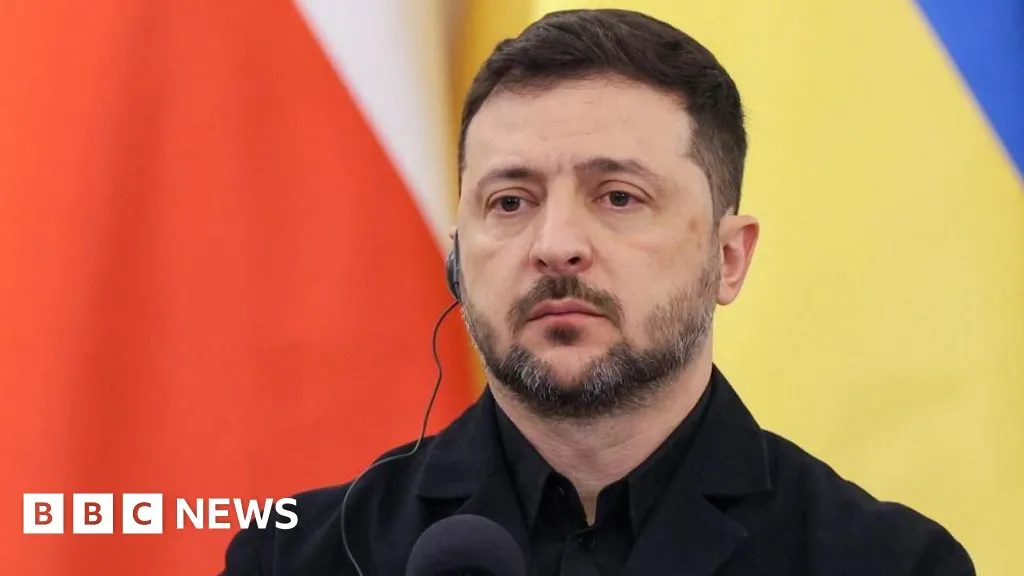
Ukraine denies Russian drone attack claims, with Zelensky accusing Moscow of disrupting peace talks. Russia threatens to revise its negotiation stance.
news, Ukraine, Russia, drone attack, Zelensky, Putin, peace talks, Donbas, international relations
Ukraine Denies Russian Claims of Drone Attack on Putin’s Residence
Ukrainian President Volodymyr Zelensky has firmly denied accusations from Russia that Ukraine launched a drone attack on President Vladimir Putin’s residence. Zelensky asserts that these allegations are false and are part of a Russian strategy to sabotage ongoing peace negotiations between the two countries.
Details of the Alleged Drone Attack
Russia’s Foreign Minister, Sergei Lavrov, stated that Ukraine allegedly launched 91 long-range unmanned aerial vehicles (UAVs) targeting Putin’s state residence in the northwestern region of Novgorod, Russia. According to Lavrov, all drones were intercepted and destroyed by Russian air defense systems, with no reported casualties or damage.
Despite the claims, it remains unclear where President Putin was at the time of the purported attack. Lavrov signaled that Russia will review its stance in ongoing peace negotiations, citing the incident as a justification.
Zelensky’s Response: “Typical Russian Lies”
In response, President Zelensky dismissed the allegations as “typical Russian lies” designed to justify further Russian attacks on Ukraine and derail efforts toward a lasting peace. He emphasized, “It is critical that the world doesn’t stay silent now. We cannot allow Russia to undermine the work on achieving a lasting peace.”
Zelensky also noted that Russia has a history of targeting Ukrainian government buildings, adding context to his skepticism regarding Moscow’s latest claims.
Impact on Peace Talks
Lavrov’s statement on Telegram labeled Ukraine’s alleged actions as “state terrorism” and warned of a possible revision of Russia’s negotiating position. However, he clarified that Russia does not plan to withdraw from talks with the United States.
For more information on the ongoing negotiations, see our detailed Ukraine-Russia Peace Talks Overview article.
Recent US-Ukraine Talks and Security Guarantees
The allegations from Russia followed high-level talks between the US and Ukraine in Florida, where President Donald Trump and President Zelensky discussed measures for a potential peace agreement. Zelensky stated that the US had offered Ukraine security guarantees for 15 years, with Trump claiming that the agreement was “close to 95% done.”
Nonetheless, complex issues such as the future of the Donbas region and the status of the Zaporizhzhia nuclear plant remain unresolved. Moscow currently controls about 75% of Donetsk and 99% of Luhansk (collectively known as Donbas).
Previous Russian Objections
Moscow has previously rejected essential parts of the US-Ukraine peace plan, further complicating the path to a resolution.
White House and Kremlin Reactions
According to the White House, President Trump had a “positive call” with Putin following his meeting with Zelensky. Kremlin aide Yuri Ushakov reported that Putin expressed anger over the alleged drone incident, suggesting that this could impact the US position toward Ukraine.
The White House confirmed the call took place but did not comment on the specifics of Ushakov’s statements. Putin declared that any such “reckless terrorist action” would be met with “the strongest response.”
Conclusion
As tensions escalate, both Russian and Ukrainian leaders are doubling down on their respective narratives. The international community is urged by Kiev not to remain silent in light of what it describes as unfounded Russian provocations designed to destabilize peace efforts.
For authoritative coverage, see the original report from the BBC News.