
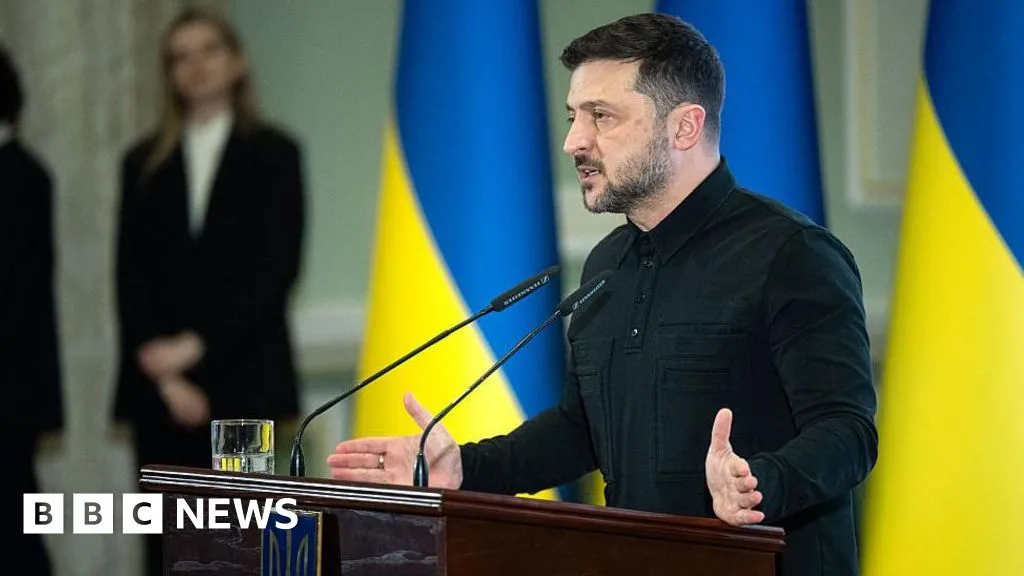
Ukraine unveils an updated 20-point peace plan with options for demilitarized zones and security guarantees, aiming to end the conflict with Russia.
news, Ukraine, Russia, peace plan, Donbas, demilitarized zone, security guarantees, NATO, EU, diplomatic negotiations
Ukraine 20-Point Peace Plan Proposes Demilitarized Zones and Security Guarantees
By Paul Kirby — Europe Digital Editor
Summary of the 20-Point Peace Plan
President Volodymyr Zelensky has outlined an updated peace plan aimed at resolving Ukraine’s ongoing conflict with Russia. The plan, shaped in collaboration with US and European negotiators, was agreed upon during weekend talks in Florida. It focuses on the potential withdrawal of Ukrainian troops from the eastern regions, the creation of demilitarized zones, and guarantees of ongoing security support from Western allies.
Demilitarized Zone and Free Economic Zone Option
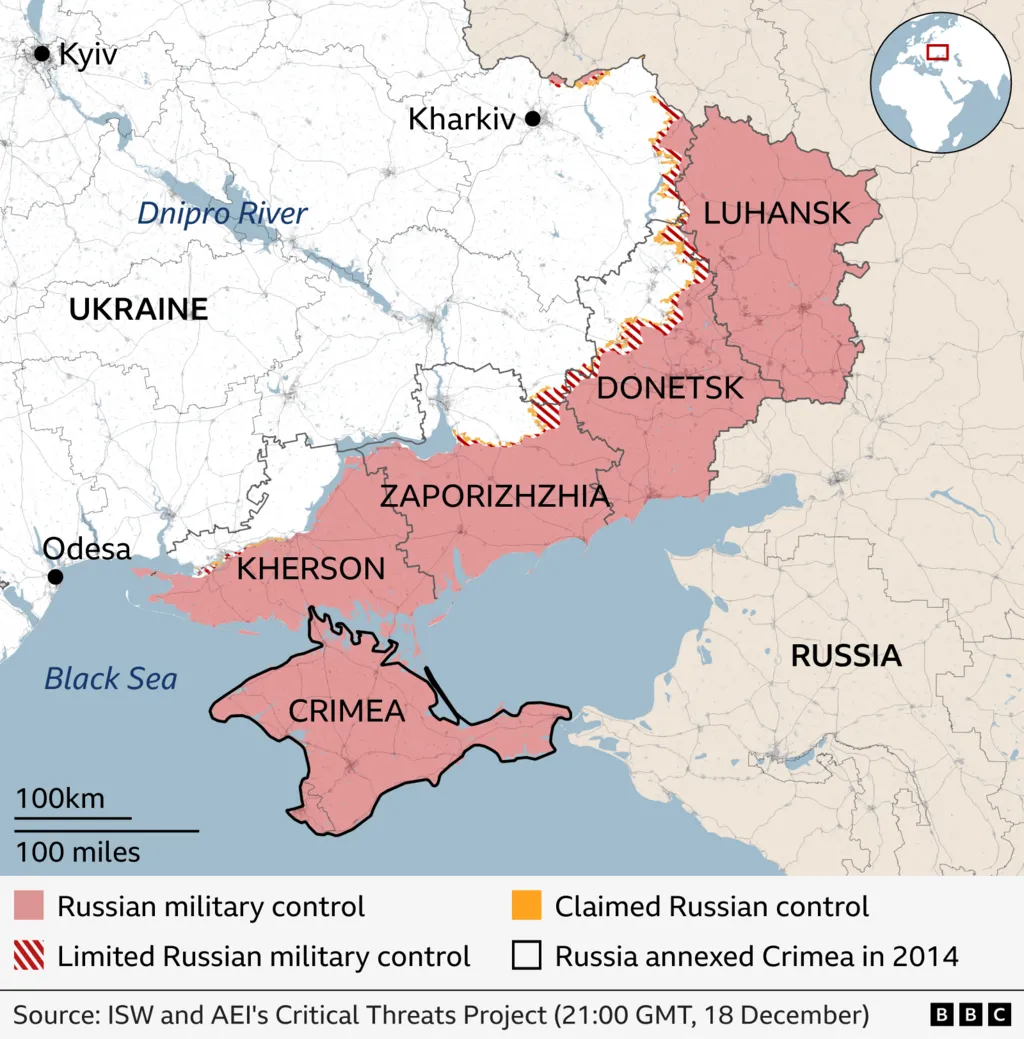
The primary feature of the new proposal is the establishment of a demilitarized or free economic zone, particularly in the contested Donbas region. Zelensky explained that, while Ukraine opposes troop withdrawal, US negotiators are seeking solutions such as policing demilitarized areas and possible economic incentives.
Ukrainian forces’ withdrawal would need to be accompanied by Russian withdrawals, with both sides pulling back their heavy military presence by agreed distances—five, ten, or forty kilometers, depending on the specific area. Any vacated area would be secured by Ukrainian police, and international monitoring forces would be deployed to ensure compliance and deter infiltration.
Key Plan Features
- Demilitarized or free economic zones in eastern Ukraine, administered by Ukrainian authorities.
- International forces stationed along the new boundaries to monitor compliance.
- Security guarantees coordinated between the US, NATO, and European partners, closely mirroring the security umbrella afforded by NATO membership.
- Maximum permitted Ukrainian armed forces strength set at 800,000 in peacetime.
- Non-aggression pact and international monitoring mechanism proposed.
- Referendum required to approve the peace plan and any free economic zones.
- Joint management proposals for contested areas including the Zaporizhzhia nuclear power plant, though Kyiv remains opposed to Russian involvement in its operation.
- Plan for a $200 billion Ukraine investment fund for post-war reconstruction and development.
- No restrictions on future NATO membership, and a clear path for Ukraine’s accession to the European Union.
- Commitment for Ukraine to hold elections as soon as feasible after a peace agreement is reached.
Territorial and Political Challenges
Russia has demanded substantial territorial concessions in the Donetsk region as the price for peace, a condition Ukraine has not accepted. Sensitive issues regarding borders and political control are expected to be resolved at the presidential level, according to Zelensky.
Zelensky stressed that any economic or demilitarized zone in Donbas would remain under Ukrainian governance and “definitely not the so-called Russian police.” International peacekeepers—rejected so far by Russia—would monitor the area to maintain stability.
The updated plan evolves previous documents, which many saw as skewed towards Russian interests. Now, the emphasis is on Ukrainian sovereignty, security guarantees, and a framework enabling a durable peace.
For more on recent territorial developments, see our detailed coverage on the capture of Siversk.
International Reaction and Next Steps
President Putin has voiced skepticism about the compromise, threatening further military advances unless Ukrainian forces withdraw completely from the east. Yet, diplomatic pressure is growing. President Trump has advocated strongly for a negotiated settlement, warning of increased US military support and sanctions if Russia refuses the plan.
The proposal would require joint international supervision—a move that echoes calls from the United Nations Peacekeeping Mission for independent oversight in conflict zones worldwide.
The plan also proposes joint control of and future investment around the Zaporizhzhia nuclear power plant and demands a Russian military withdrawal from several other Ukrainian regions, including Dnipropetrovsk, Mykolaiv, Sumy, and Kharkiv.
European Integration and Security Guarantees
Significantly, the peace plan affirms Ukraine’s right to pursue European Union membership, setting a defined timeline for accession. Security guarantees mirror NATO’s Article Five—collective defense—and reinforce Ukraine’s sovereignty and territorial integrity.
The agreement notably omits earlier proposals to ban Ukraine from entering NATO, a long-standing Russian demand, representing a diplomatic win for Ukrainian negotiators.
Conclusion
The 20-point peace plan represents one of the most structured attempts yet to end the conflict between Ukraine and Russia. With international backing, defined zones, and security commitments, it sets the stage for a potential cessation of hostilities and broader European integration for Ukraine.
The plan awaits responses from both Russian and American officials this week, and a national referendum may soon be held in Ukraine to determine the way forward.
For ongoing updates, visit our latest news section or refer to the original BBC source.